Tuesday, 17 September 2013

Africa’s mobile phone e-learning transformation

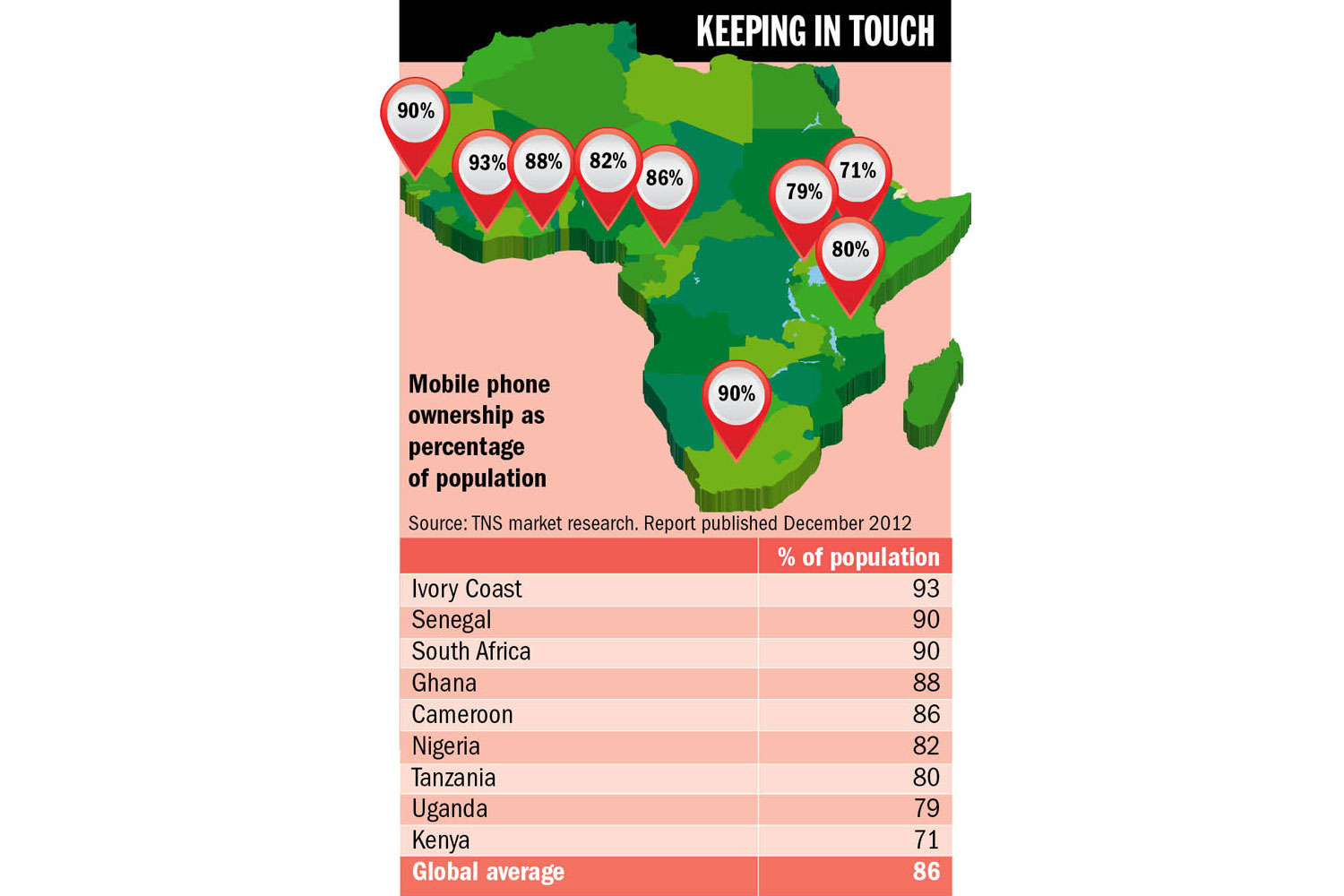
Fascinating article from this week's Times Higher Education magazine from which I have linked to the following info graphic -

Fact : there are now more mobile phones in Africa than in the USA!


Sunday, 1 September 2013

Release of EpiCollect +

Imperial College have just released EpiCollect + which offers a range of advanced features for data surveillance using mobile phones. We have been testing out the new application in Kenya over the last week and are impressed by the new form building interface and additional features such as Jumps and Branches.

EC_logoThe server application has also been significant advanced and now offers a simple install apk for institutional servers and a more efficient MySql database support. As a result performance which had been a problem with large data sets with the original application is now much improved.

Some of the key features of EpiCollect + include:
Features:
iconDrag and Drop form Builder
iconDefine multiple linked form(s)
iconAny number of text questions
iconAny number of media fields:
 
google mapcameracamerasmallmicrophonebarcode
  
iconView / chart with Maps
iconDownload all data
iconGreater Form Validation
iconDefine form logic (jump Q's)
iconUpload ecml form definitions

Read more at http://www.epicollect.net/


Saturday, 24 August 2013

Poster presentation on Veterinary Surveillance using EpiCollect + at the GeoVet Conference, London 22nd August 2013

This joint poster provided an opportunity to present the use of mobile technologies for livestock disease surveillance based on the work we have carried out in East Africa.  It was also a chance to profile the brand new release of EpiCollect + developed by David Aanensen and his team at Imperial College, London.
Click on the poster to view a larger version


Friday, 26 July 2013

Poster on mobiles presented at Vet Ed, Dublin in July 2013


Please click the thumbnail above 
to see full poster

Friday, 17 May 2013


Using mobiles to promote awareness of One Health issues

Short, N. Royal Veterinary College; Hyde, B. University of Nottingham; Duggan, V. Royal Veterinary College; Karlsson, P. Royal Veterinary College

Recent developments in mobile technology have the potential to transform access to information and enhance sharing of knowledge. This will provide new opportunities in Africa to reach livestock producers who are often located in the more remote rural areas. This could be of particular benefit to health services when faced with new or emerging diseases where both animal and human health knowledge needs to be available on the frontline.

This post describes a project to develop a digital knowledge base of key One Health information for use in rural communities. This is based on existing work using basic smartphones in East Africa to map livestock disease outbreaks. The project aimed to identify the potential benefit of also using these phones to disseminate concise information related to both human and animal disease which can be viewed on various mobile platforms.

The digital information has been developed covering emerging and prevalent zoonotic diseases in the first instance. Basic “factoids” have been written in a format which can be viewed on a mobile phone. The intention is to translate these into local languages. Each factoid has links to more detailed information on WikiVet for users with internet access. There is also a facility to report GPS locations of cases.

The amalgamation of both veterinary and human health care in the One Health format represents not only an opportunity to improve livestock health, welfare and productivity, but also to reduce the vast number of zoonotic diseases which currently affect millions of people worldwide.

This is a copy of an abstract for a poster that we have submitted to the VetEd symposium taking place in Dublin in June 2013.

Thursday, 18 April 2013

Another use for EpiCollect ....


Elephant killed by poachers, Voi area, Kenya
(Wikimedia Commons)
Vetaid Kenya have been using EpiCollect on mobile phones for several years now to monitor livestock vaccination coverage, diseases outbreaks and drought relief. We have just hear from Dr Gabriel Turasha that they have now started to adopt a similar approach to monitor elephant poaching.
Working with the African Wildlife Foundation, they have recruited and trained 12 Community Animal Health Workers to use EpiCollect on their mobile phones. They have also been trained in wildlife surveillance and reporting techniques.
This approach makes good sense as the animal health workers treating livestock are often working in the same habitat as wildlife. They are therefore likely to hear about any poaching activities as they go about they existing work vaccinating and treating cattle. This is a great example of One Health approaches which combine veterinary, human and wildlife medicine.

Friday, 1 March 2013

FAO on EpiCollect in Kenya


Farmers and veterinarians across Africa are increasingly using cell phones to issue alerts quickly about possible animal disease outbreaks at a very early stage and to track wide-scale vaccination campaigns.

Mobile phone applications are making ‘early warning’ a matter of seconds instead of weeks for animal disease outbreaks, and essential veterinary care can be tracked with pinpoint accuracy and speed, thanks to the Global Positioning System function now directly integrated in most cell phones.

“FAO and partners are piggy-backing on this enormous uptake of mobile phone technology for uses in reporting animal disease outbreaks, tracking vaccination campaigns and the delivery of veterinary treatments, such as deworming animals,”  said Robert Allport, FAO Kenya’s Assistant FAO Representative for Programme Implementation.

In Kenya, for example, where three out of four people now have a mobile phone, FAO has partnered with the Royal Veterinary College and local NGO Vetaid, to  support the pilot testing of a mobile phone application developed by researchers at the Imperial College London’s School of Public Health. The application, called EpiCollect, helps to track animal vaccination and treatment campaigns. The application and storage space are provided for free on the EpiCollect website, which assigns a unique location for each project. That location is known only to the users – such as national veterinary officials and field vets – involved in the project. The EpiCollect database is not searchable, so prying eyes won’t find potentially sensitive information.

Read the full article on the FAO site